An Artistic Tour of Chicago
By Sinead Quinn
As part of my spring break I spent four days in Chicago. As an Art and Art History student, whenever I travel I make it a priority to visit art and science museums and historical locations. This trip was no exception. Here’s my tour of a few of Chicago’s very best art and history institutions.
When I arrived, my friend Anna and I headed straight to the Art Institute of Chicago, which even non-museum people will recognize as being immortalized in Ferris Bueller’s Day Off. The Institute has an extensive Impressionist collection, with works by Monet, Cezanne, Toulouse- Lautrec, Renoir, and Caillebotte.
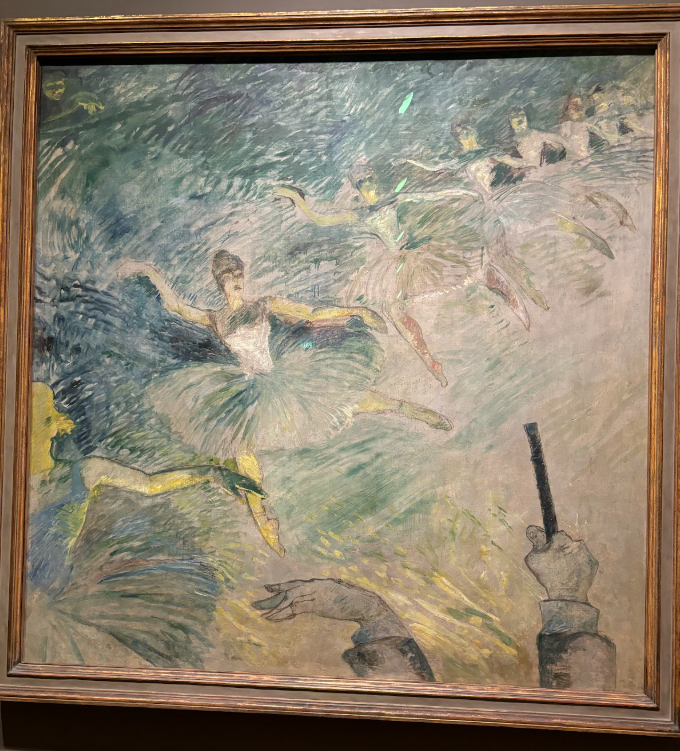
Ballet Dancers by Toulouse-Lautrec
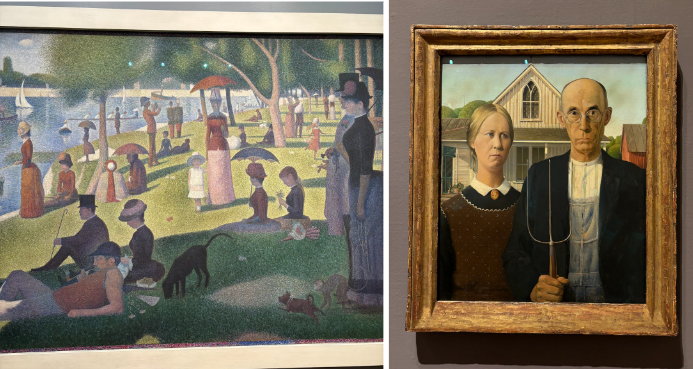
A few other highlights at the Institute include Seurat’s “Sunday on La Grande Jatte,” Grant Wood’s “American Gothic,” and Edward Hopper’s “Nighthawks.”
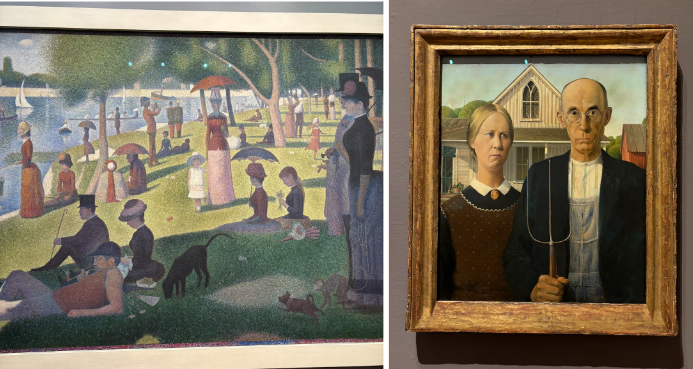
Left: Seurat’s Sunday on La Grande Jatte. Right: Wood’s American Gothic
As for personal favorites, I was introduced to Edvard Munch’s “The Girl by the Window,” Lautrec’s “Ballet Dancers” and Raqib Shaw’s masterwork “Paradise Lost,” which is over 100 feet long and still not complete.
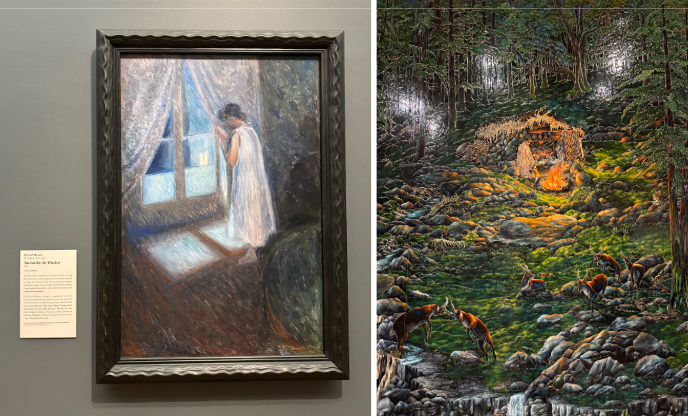
Left: Munch’s Girl by the Window. Right: Detail of Shaw’s Paradise Lost
If you’re a fan of photography, you’re bound to know Cindy Sherman, whose portraits dominate a gallery in the Institute’s modern art space. Nearby is a Warhol print of Elizabeth Taylor.
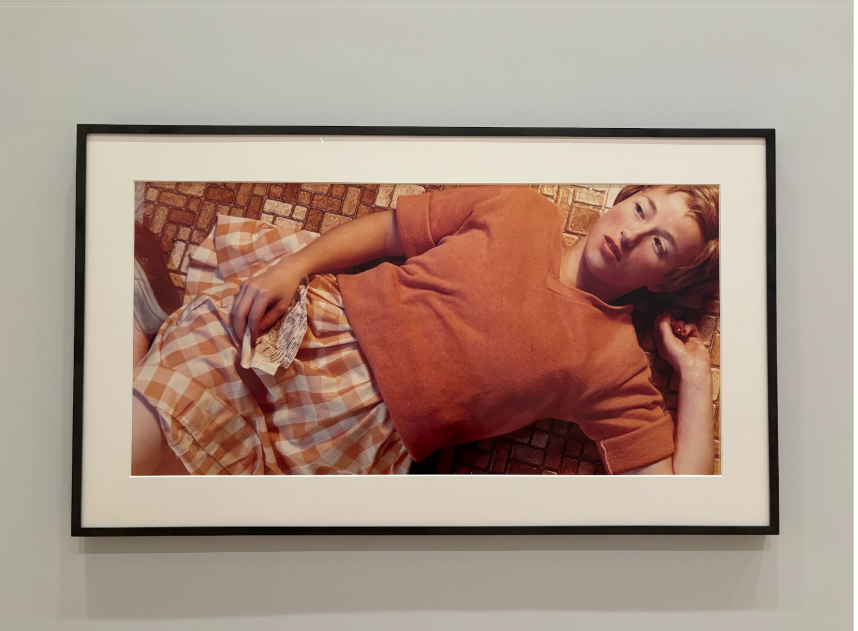
Untitled #96, from Centerfolds series by Cindy Sherman, 1981
Next we visited the Frederick C. Robie House, a Chicago landmark on the University of Chicago campus in Hyde Park. The Robie House is a Frank Lloyd Wright masterpiece, and a frequently cited example of Prairie Style architecture, with its horizontally-focused design. It strikes a wonderful modernist contrast to the Collegiate Gothic style of many of the campus buildings nearby.
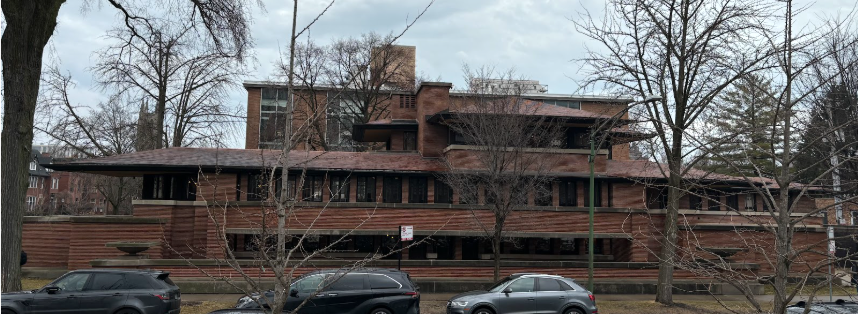
View of the Frederick C. Robie House from across the street. Notice the multi-layered terraces that give the house the illusion of being stretched horizontally.
Wright was well known for his stained glass windows, which served as artwork in his minimalist houses. For Wright, every minute detail of the house was carefully considered, down to the light sconces on the wall!
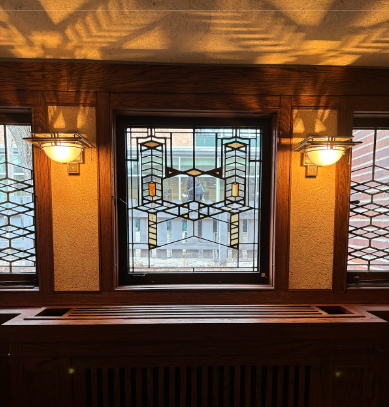
Patterns projected by Wright’s light sconces, and the corn pattern of his stained glass which connects the indoors with the prairie landscape.
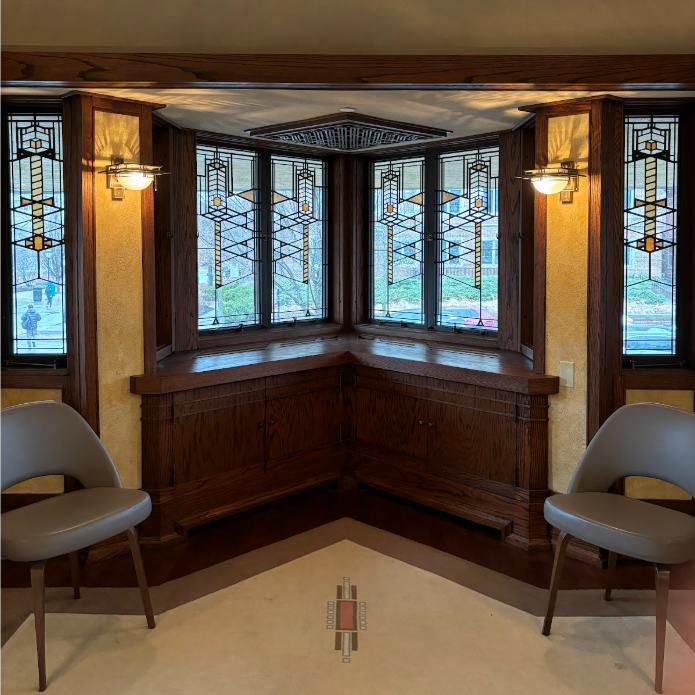
Wright designed the Robie House to feel like a ship. This room at the front of the house made me feel like I was standing in the bow.
Kitty-corner to the Robie House is the Institute for the Study of Ancient Cultures (ISAC), a well-regarded center for archaeological research. Its collection is predominantly focused on the ancient civilizations of West Asia and North Africa, including Assyria, Egypt, and Persia.
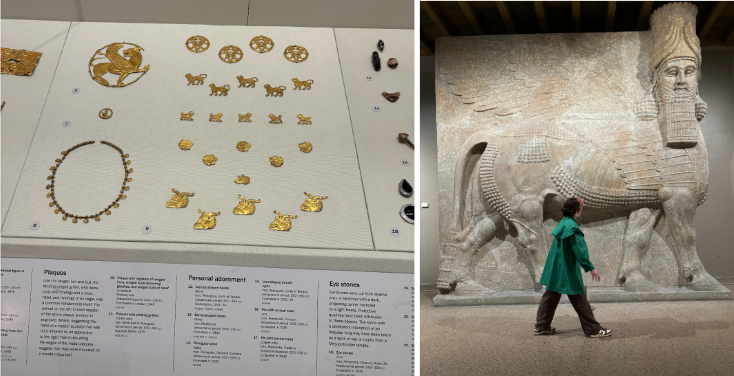
Left: Personal adornment from ancient Persepolis. Right: Human-headed winged bull from the palace of Assyrian king Sargon II.
The next day we visited the Field Museum of Natural History. It is known for its T. Rex skeleton, SUE, the largest and among the most complete T. Rex fossils ever found. Other exhibitions concern human evolution, the history of China’s dynasties, and Mayan civilization.
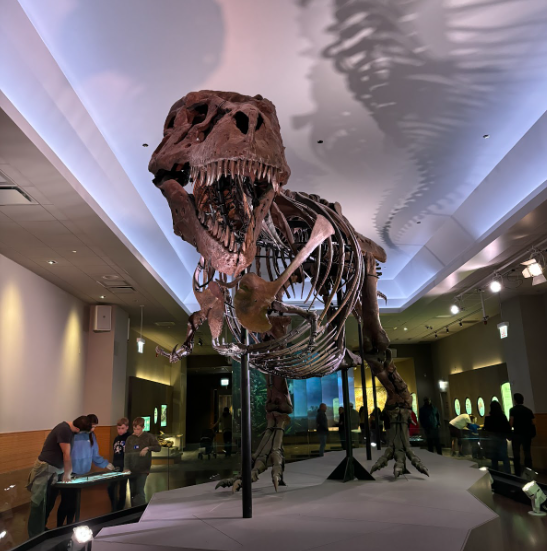
SUE the T. Rex strikes both fear and adoration in those who visit her.
The last museum we visited was the Chicago Swedish American Museum. This place was a hidden gem. Located in the neighborhood of Andersonville, a place historically populated by Swedish immigrants, the museum’s permanent collection chronicles the journey of Swedish immigrants to the U.S., as well as celebrating the strides they made in Chicago in particular. The mannequins are a bit uncanny, but the content was highly engaging.
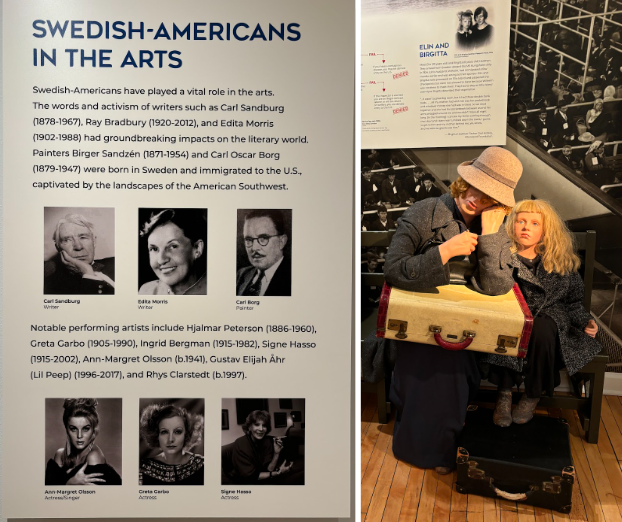
Left: Info panel on Swedish-Americans in the arts. How many do you recognize? Right: Mannequins representing Elin and Birgitta, real Swedish immigrants who had to stay on Ellis Island overnight until their sponsor picked them up.
In the contemporary gallery, the current exhibition features the oil paintings of Per Elof Nilsson Ricklund, a Sámi artist whose surrealist work features the symbols and values of his culture. I adore his style, use of color, and level of detail.
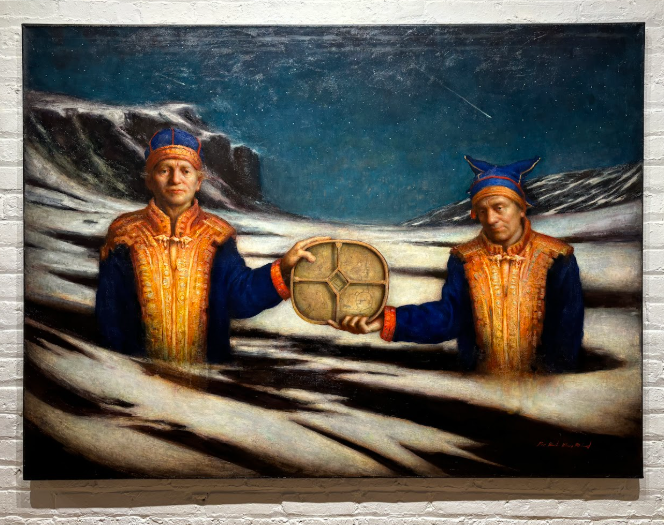
“Noaddi (Burden)” by Per Elof Nilsson Ricklund
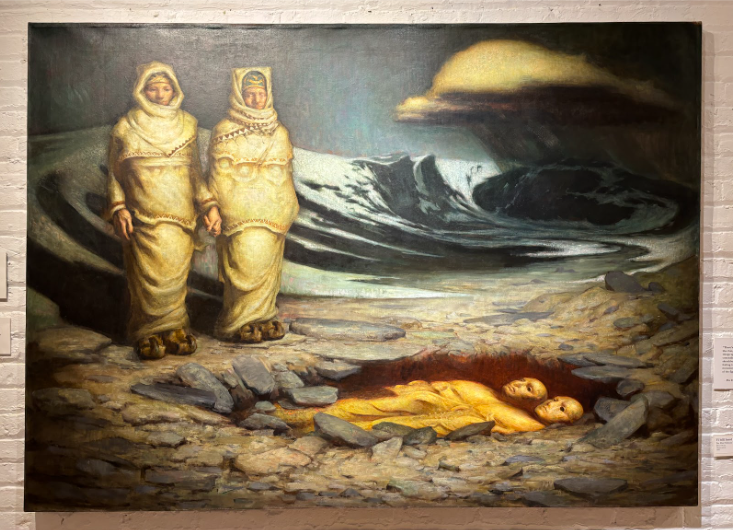
“Vi höll hand (We held hands)” by Per Elof Nilsson Ricklund
I was truly amazed by the quality and variety I saw in Chicago’s museums, and I only just scratched the surface. There are many museums and historical locations I have yet to visit, like the Chicago Cultural Center, the Museum of Contemporary Art and the DuSable Black History Museum. I can’t wait to visit again to check these three and more off my list!