
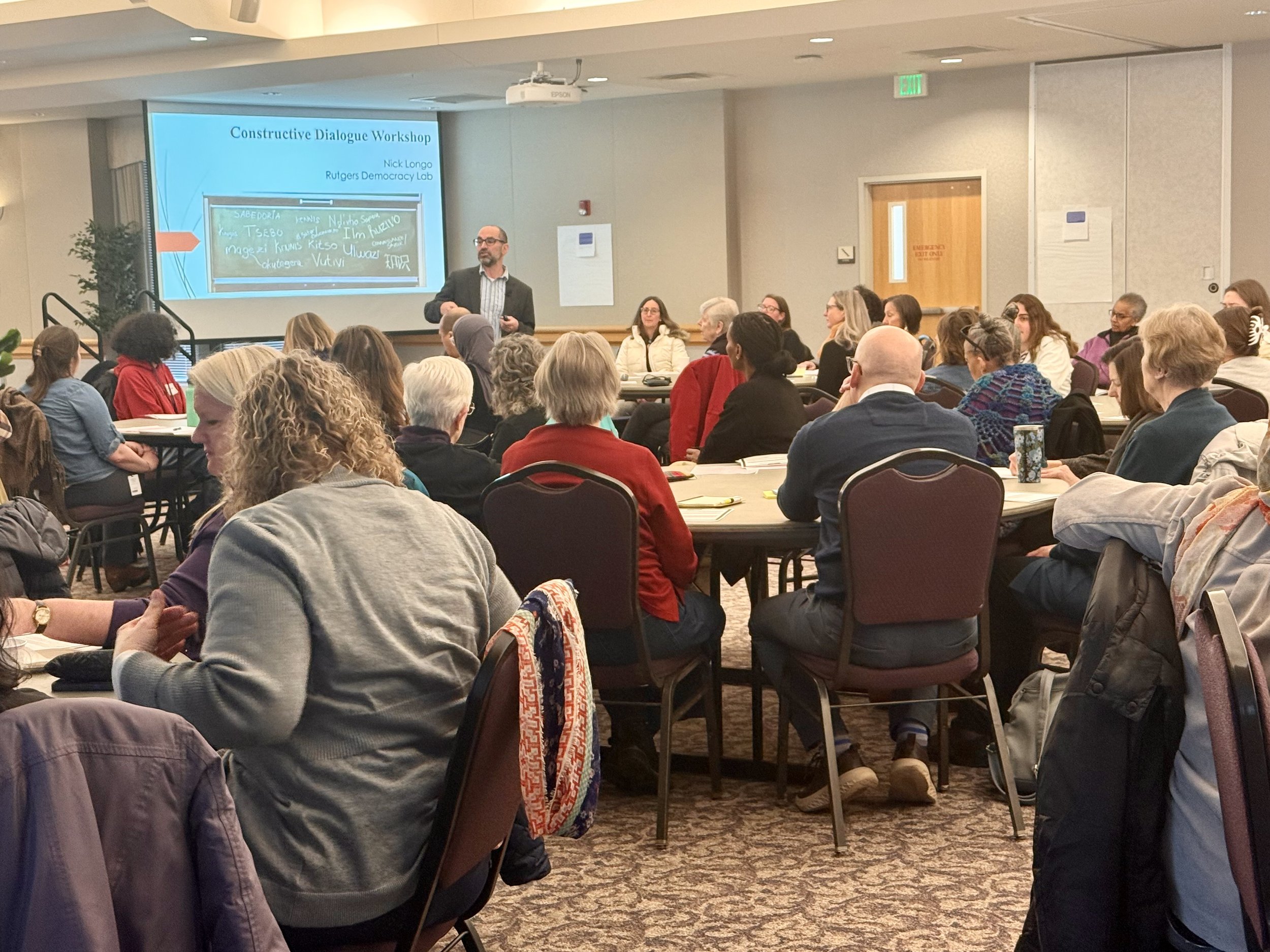
Nick Longo and Constructive Dialogue Workshop
By Ella Tracy
Last fall, students in select Reflective Woman courses engaged in training from the Constructive Dialogue Institute (CDI). On Mar. 4, students, faculty, staff and CSJ members gathered for an in-person workshop based on the same material.
The workshop was led by Dr. Nick Longo, who is a CDI educator and co-director for the Dialogue, Inclusion, and Democracy (DID) Lab at Providence College. The 2-hour workshop was an abbreviated version of CDI’s curriculum, giving workshop attendees the chance to cultivate skills needed for constructive dialogue.
According to CDI’s website, constructive dialogue is “a form of conversation where people with different perspectives try to understand each other — without giving up their own beliefs — in order to work together.” The organization offers training, both in-person and online, to help campuses transform how they handle conflict and difficult conversations. They teach 5 principles of constructive dialogue, all of which were discussed at the workshop at St. Kate’s.
Let go of winning
Ask questions
Share stories
Respond rather than react
Find what’s shared
Attendees were encouraged to break the ice by talking to a stranger and finding 5 things they had in common. Groups then were challenged to come up with a pertinent campus issue around which they would want to facilitate a constructive dialogue. A mixed audience of students, faculty, staff and CSJ perspectives resulted in a diverse and insightful pool of conversation topics.
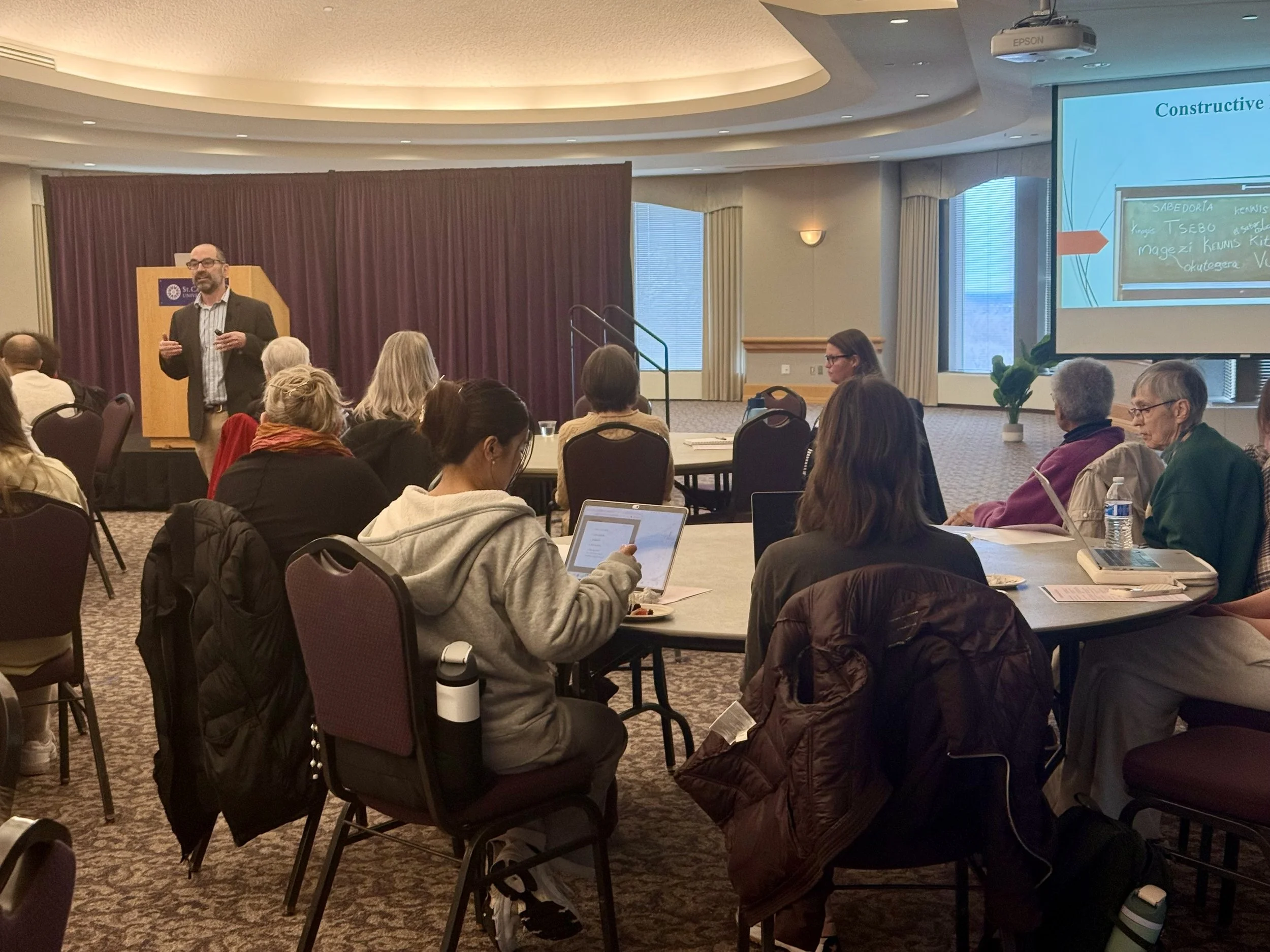
Photo credit: D'Ann Urbaniak Lesch
To practice constructive dialogue methods, attendees were challenged to evaluate 8 scenarios and propose how they would frame a conversation about that scenario. Examples centered around subjects like politically-affiliated clubs opening on campus and changing research project language to apply for federal grants. Under the constructive dialogue guidance, attendees were encouraged to ask questions, name shared values, recognize where harm was done, and then confront any conflict.
Sam Schroeder ‘28 (Economics, Political Science, Public Policy) attended the workshop. She said, “After my experience at the dialogue workshop, I plan to seek out the people I typically avoid in my daily life. Maybe ask myself the questions of why I do avoid certain people I do not know. I know the conversations I could have with different people can help me learn and understand more perspectives.”
One student who attended the workshop and wished to remain anonymous gave the feedback that many of the scenarios presented by workshop leaders assumed that students were the ones needing mediation, instead of empowering students to be the mediators of their own conversations. Future sessions with students could acknowledge the leadership potential of student groups and encourage them to design their own dialogues around issues they care about.
Additional information about CDI and their workshops can be found on their website here.