“Students deserve to be heard”: Inside the Student Senate meeting on campus spaces
By Amirah Idris
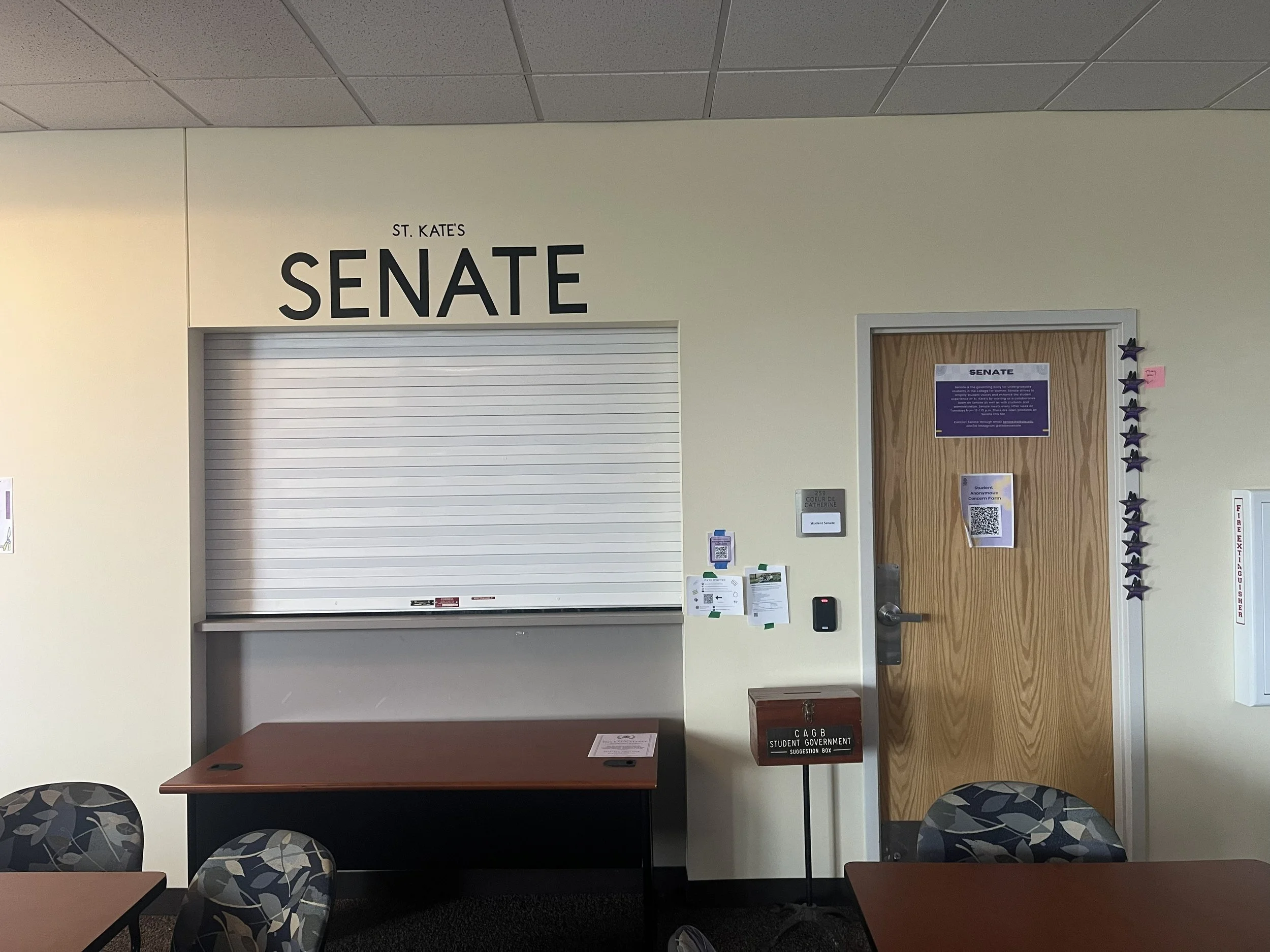
A recent Student Senate meeting brought together students, leadership and President Marcheta Evans in response to growing concerns about student spaces on campus. What started as frustration turned into a moment of collective voice, as students showed up to speak on changes that directly impacted their sense of belonging.
The energy in the room was hard to ignore. Students came prepared, many raising questions about transparency and decision-making. For some, this was not just about physical spaces, but about feeling included in conversations that shape their college experience.
“I was very pleased to see students show their frustration and confusion,” said Siinian Ephrem ‘27 (Sociology, Critical Studies of Race and Ethnicity). “As students, it’s our right to know what’s happening in our school, as well as express ourselves if we don’t agree with those changes.”
Ephrem emphasized that moments like this reflect a deeper issue: a lack of student involvement in decisions that directly affect them. While the meeting created space for dialogue, many students still felt that time constraints limited how many voices could be heard.
“I remember seeing a lot of hands up, and only a small number of students being able to speak,” Ephrem said. “There’s a lot of value in just listening to what people have to say, especially if one of the biggest issues being raised is that they aren’t feeling heard.”
At the center of the conversation were student spaces such as the Center for Women, QSA Lounge, Katie’s Closet and the SEEK Office. For many students, these spaces represent more than just physical locations; they are places of support, identity and community.
“Student spaces matter because they help build community,” Ephrem explained. “These places aren’t just walls and furniture. It’s years of students’ hard work to cultivate something special.”
For students navigating higher education, especially those who may be first-generation, these spaces can provide stability in an otherwise overwhelming environment. Changes to these areas can feel personal, as they impact not only resources but also a sense of belonging.
“I’ve been very disheartened this whole year witnessing the changes to student spaces,” Ephrem said. “Students shouldn’t have to worry about the places they’ve found safety and connection being uprooted.”
Despite the concerns, the meeting also demonstrated the power of student voice. The turnout, questions and readiness to speak up reflected a community that is engaged and unwilling to stay silent.
As conversations continue, many students are hoping for more than just acknowledgment. They are asking for transparency, inclusion and meaningful action moving forward.
The message from students is clear: spaces built for students should be shaped with students, not without them.