Artemis II: Different firsts, one journey
By Faduma Ali
I think what surprised me most about Artemis II isn’t just that it made history, but that the way it made history feels different. It didn’t feel distant or unreachable in the way these kinds of missions usually do. Instead, it felt closer, more grounded, and strangely to me, more human.
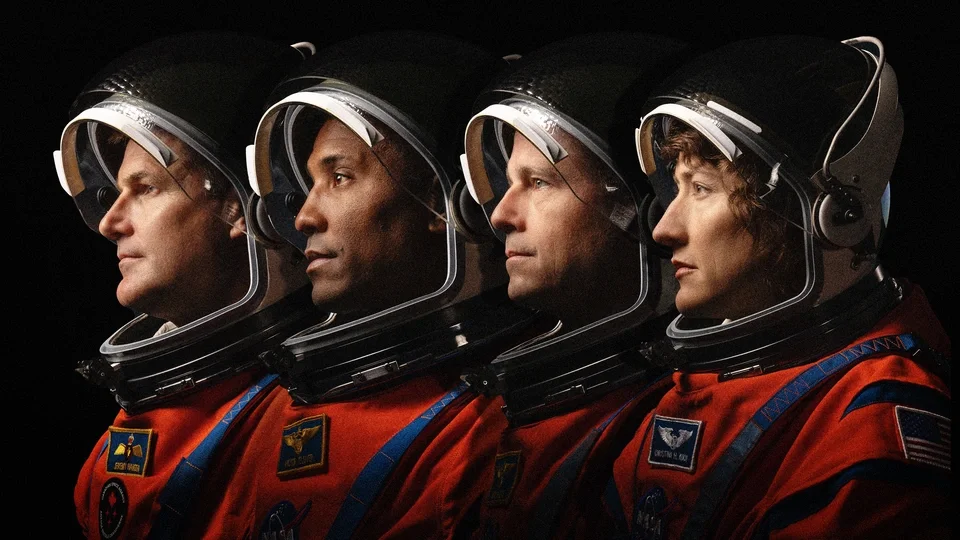
On paper, everything about this mission is extraordinary. Four astronauts, Reid Wiseman, Victor Glover, Christina Koch, and Jeremy Hansen, traveled farther from Earth than any humans ever have. That alone is a record that will be written into history. But what stood out to me was not just the distance they reached, but the fact that each of them was making history in their own way at the same time.
Every member of the crew carried something special into the mission. Glover became the first Black astronaut to travel to the Moon. Koch became the first woman to travel around the moon. Hansen became the first Canadian to be part of a lunar mission. Wiseman led the mission as commander, responsible for every decision, every direction, and every moment of safety. Individually, these are milestones that would each be enough to define a career. Together, they created something larger than any single achievement.
What made this different for me is that these “firsts” didn’t feel separate. They didn’t feel like isolated accomplishments. They felt connected, happening in the same moment, in the same spacecraft, with the same goal. It wasn’t just four individual wins happening side by side; it was four humans making history unfold together as part of one shared mission.
That is what made it feel more real to me.
I think space missions are usually described in a way that makes them feel distant. We hear about rockets, technology, and precision, and it starts to sound like something that belongs only to science and engineering. But Artemis II didn’t feel like that in the same way. It still had all of the science, of course, but underneath it, there was something else that was harder to ignore: a partnership that felt human.
Each astronaut had a role that depended on the others. Wiseman made decisions as commander, Glover controlled and maneuvered the spacecraft, Koch managed systems and operations, and Hansen focused on life support and safety. None of these roles stands alone. The mission only works because every part connects to the others. That structure made the entire journey feel less like individuals performing tasks and more like a group moving through something uncertain together.
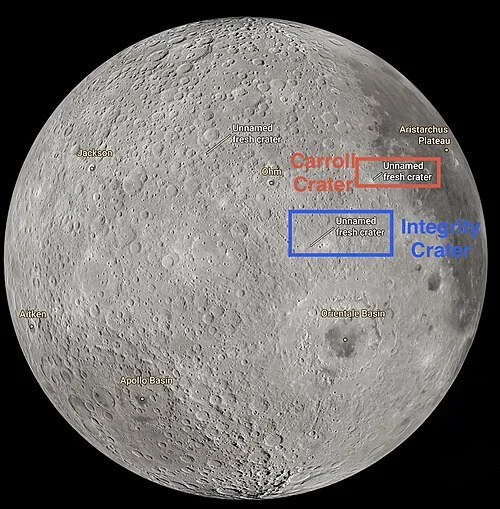
Even the small moments reflected that feeling. During the mission, the crew informally named two craters they observed on the Moon. One they called Integrity, after their spacecraft. The other was named Carroll, in a personal gesture from Wiseman, honoring his late wife who passed from cancer in 2020. These names were not the focus of the mission, but they added a touch of humanity. They showed that even in a moment defined by records and achievement, there was still room for personal meaning.
That is what makes Artemis II stand out to me.
It is not just the fact that history was made, because that happens in space exploration. It is the way that history was made through a crew working as a unit, through individual landmarks that existed together, and through a mission that still allowed space for personal human moments within something so technical and complex.
In the end, Artemis II feels like a reminder that even when humanity reaches farther than it ever has before, it doesn’t become less human. It becomes more visible.