Wicked For Good movie review *no spoilers*
By Eleanor Anderson
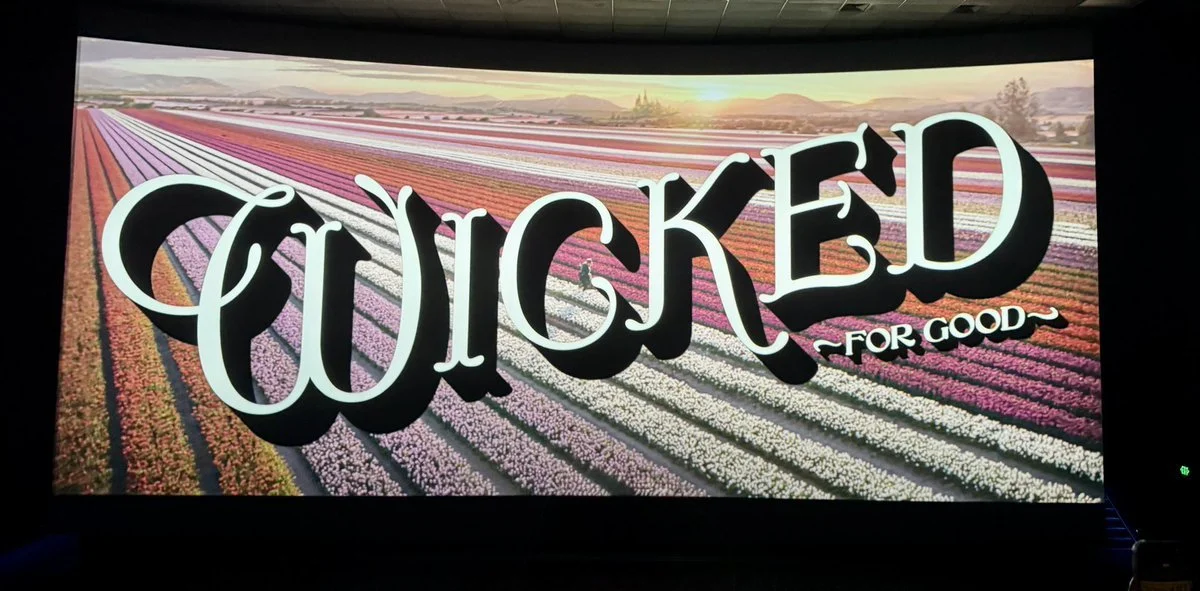
To the surprise of no one, I return to journalism with the hardest-hitting of beats: a movie review of Wicked For Good. As a resident pop-culture journalist for issues that nobody asked for (see previous articles on the Louvre heist, Christmas trees, and Barbenheimer revival) and die-hard theater fan (see my friends’ camera rolls for my short stint as a tap-dancing seagull in The Little Mermaid), this article is right up my alley. All jokes/sarcasm aside, I do believe that the Wicked franchise is highly topical to society, but especially relevant for young women, therefore earning it a special feature in the St. Kate’s student newspaper.
I’m going to be very honest with you: I didn’t love the first Wicked film. As someone who grew up listening to the original Broadway recording and highly anticipating the movie’s release since its announcement in 2017, I had very high expectations. The beautiful visuals and live vocal performances truly could not have brought the movie to near-perfection, but I was irked by the lack of a conclusion to the story. After all, if Broadway can fit both acts into 2 hours and 45 minutes, why can’t Hollywood? (insert capitalist-cash-grabbing-profit-hungry insult here… from your friendly neighborhood econ major, nonetheless.)
Without the heartbreaking end or completed character arcs, I felt that Wicked was going to lose the deeper meaning that makes it so powerful in the first place. After all, I love a good dance number or power ballad, but what I’m really looking for is the poignant story. So, for the last year, I begrudgingly listened to Dancing Through Life by Jonathan Bailey because it’s better than the original and maintained a quiet seniority complex toward those who didn’t know the full story.
Now, exactly 365 days since the first film’s debut, I will admit that I am wrong. Yes, having the story broken into two parts does take away some of the consumption value for those who can’t commit to a 5-hour storyline (I’m looking at you, TikTok addicts, who can’t make it through more than 15 seconds of content without losing interest; thank you, social media). But for those who are willing to stick it out, splitting the narrative allows for a clearer divide between the characters in the first and second acts that adds a deeper level of growth for the story overall.
And, contrary to most of the professional film critics out there, I enjoyed the second segment more than the first. Yes there are plot holes (really anything having to do with Fiyero in the last hour of the film makes no sense) and yes I hate the way they mix CGI and real-world actors or said “clock tick” 8 million times, but this second act finally gets at the true meaning of Wicked that they hint at in the first film: “Are people born wicked, or do they have wickedness thrust upon them?”
Through each of the characters - not just Elphaba - the audience is forced to determine what makes someone wicked. Not just the nature-vs-nurture question, but also if there is even a concrete definition of wickedness at all. Every character is flawed, human, and predictable to some extent, but they also represent individual responses to horrible treatment. The characters may be exaggerated to fit into Oz, but I think their behavior parallels real life in a way that people may not feel comfortable admitting.
Throughout it all, Glinda and Elphie highlight the power that platonic relationships can have in someone’s life. Not everyone gets to experience truly finding their best friend, and so often in films, this relationship is oversimplified or overshadowed by romantic interests. In the first film, the audience gets to see the relationship between these women develop past the surface level, but it is only in Wicked For Good that we understand the impact these characters have had on their counterparts. Some people hoped that the movie would rewrite the narrative to portray Glinda and Elphaba be lesbians (don’t get me wrong, I am all for queer representation). Still, I honestly feel like developing their friendship the way the story is written is an equally critical feminist message.
You may not agree with my conclusions. You may never even watch the film (just please don’t be like several of my friends and watch the second movie before the first). But I guarantee that watching Wicked For Good makes you see The Wizard of Oz through different eyes, and I do believe it might just change you for the better.