Reducing food waste and increasing sustainability: The CSJ hydroponic farms
By Bronwyn Kmiecik
Even as the weather turns colder, students at St. Kate's can still get fresh, locally grown greens thanks to the new Sisters of St. Joseph of Carondelet (CSJ) hydroponic farm. A hydroponic farm is a farming technique where, instead of plants being in soil, they are grown suspended in a nutrient-rich water solution. The farms are sustained indoors and thus can produce fresh food year-round.
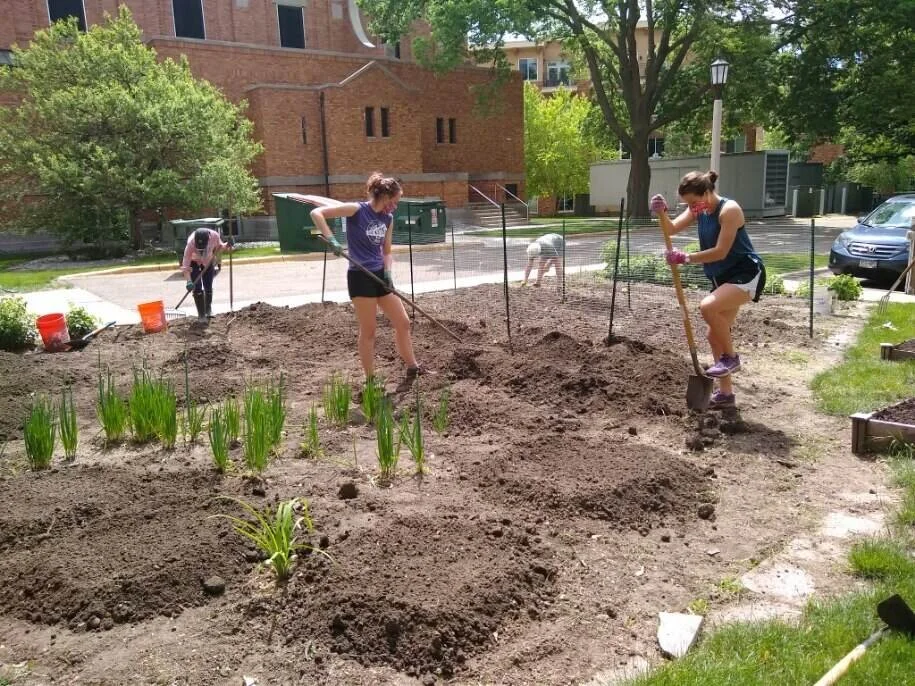
The hydroponic farms were established by the St. Kate’s/CSJ Food Access Hub thanks to a grant from Ramsey/Washington County Recycling and Energy to reduce food waste and increase sustainability. The Food Access Hub is a collaboration between the CSJ and St. Catherine University to address food insecurity, nutrition, and personal wellness. The hydroponic farms add to the initiatives of the food shelf and community gardens that the Food Access Hub operates. The individuals working on the hydroponics farm have been comparing the amount of waste they produce with that from the other food streams entering the Food Access Hub, and so far, the results have been promising. “Our Farms produce around 5% waste, which includes compost and rockwool (...). This is in comparison to an over 40% packaging and food waste coming in from our recovered food,” said Olivia Mancia, the CSJ Garden Coordinator. Thanks to the greens going straight from the garden to the hub, the farm doesn’t produce any packaging waste.
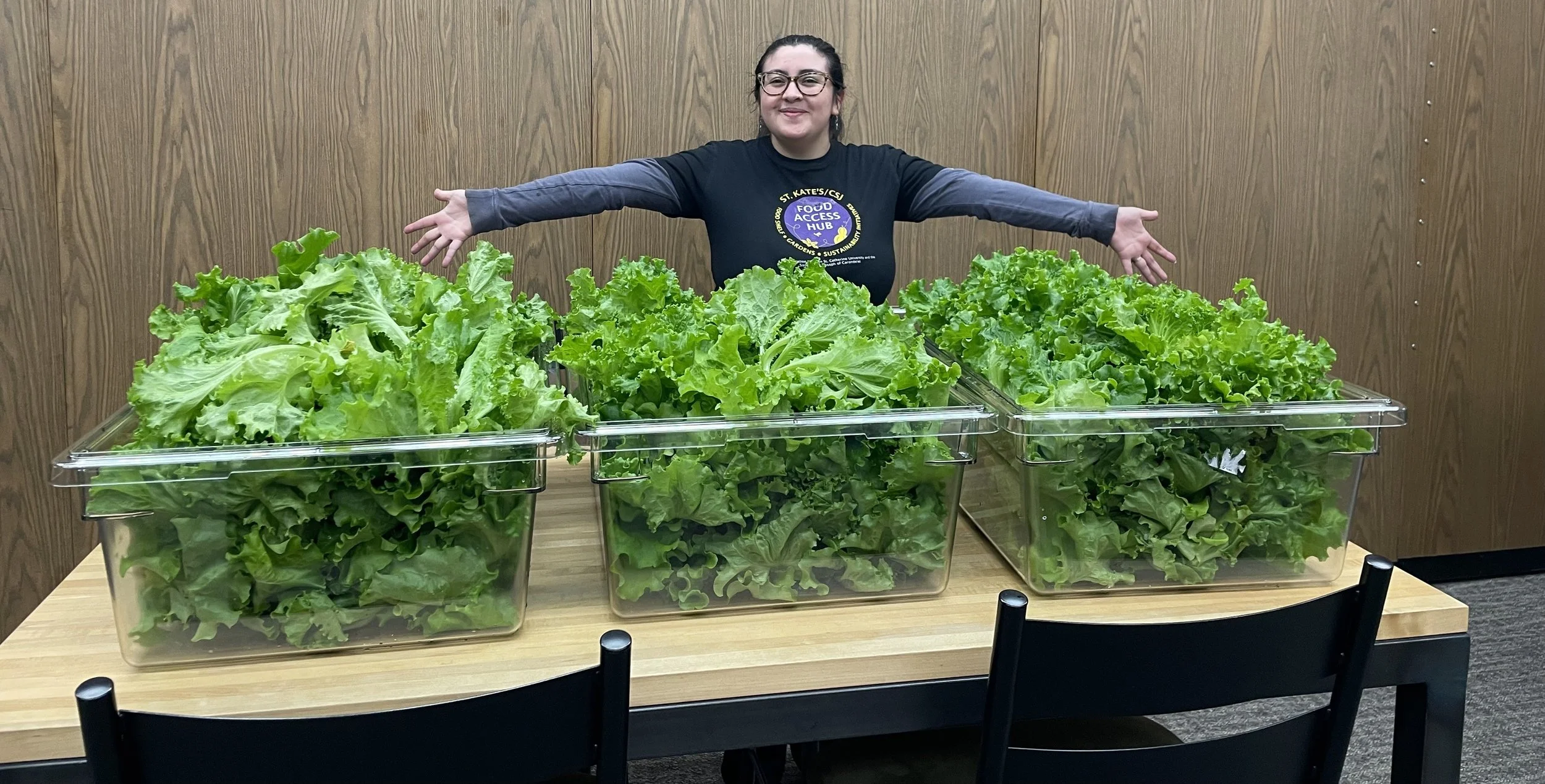
Because hydroponic farms are quite new, the farming process has been a learning curve for everyone involved. However, so far, the systems have exceeded expectations regarding efficiency and yield. “The CSJ Hydroponic Farm is estimated to be able to produce over 2,300 pounds of fresh produce yearly. That is over three times as much as the CSJ Community Garden grows a year,” said Mancia when asked about the foreseen impact of the farms. So far, they have been growing collard greens, arugula, beet greens, bok choy, tatsoi, kale and lettuce. All have grown efficiently thanks to no need for weeding, pest management or adjusting for weather.
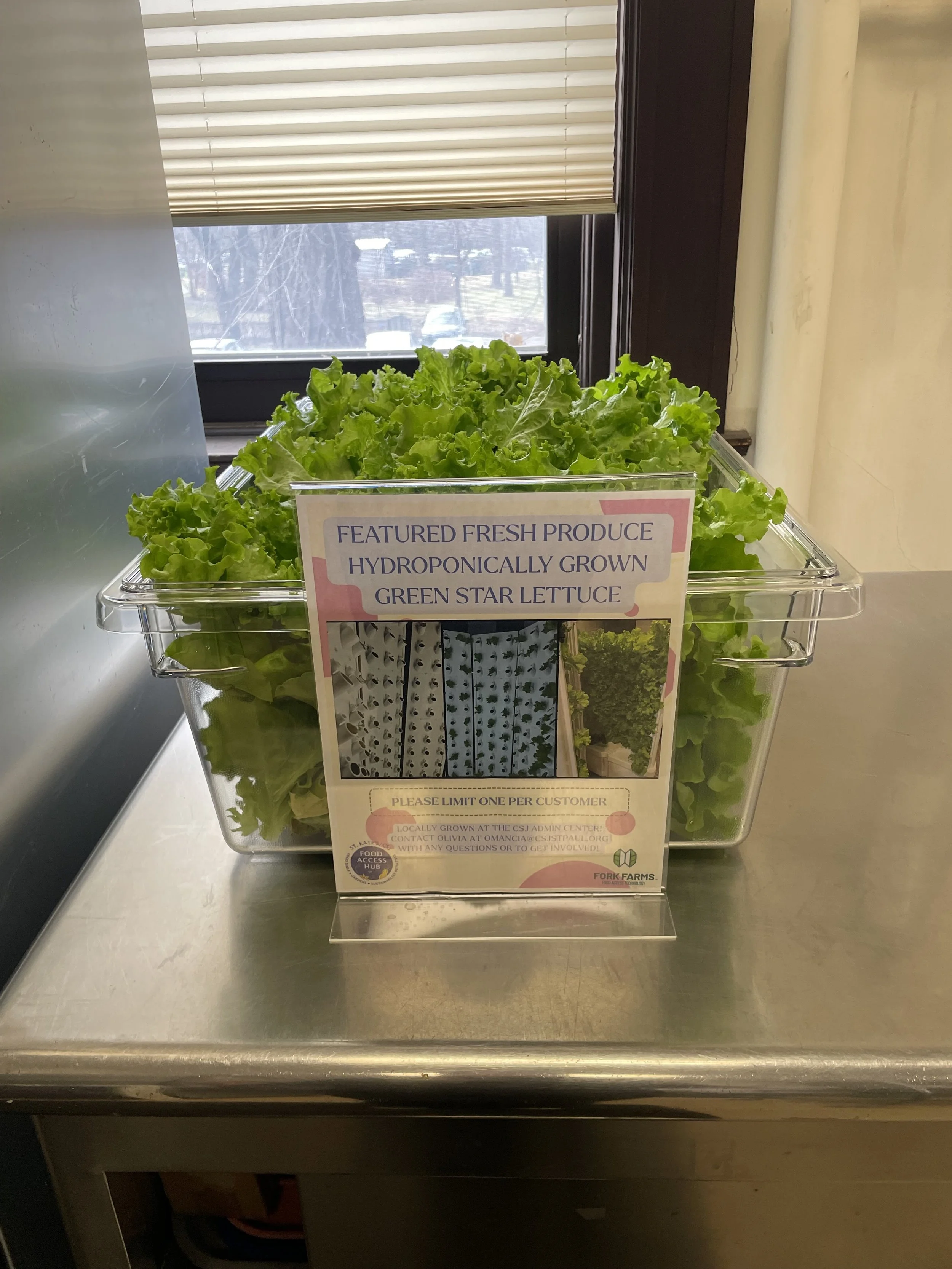
The farms also provide a great opportunity for growing the community: “We bring in various communities like other colleges, community gardeners, students and other non-profits to come and engage with the systems from seed to harvest,” said Mancia. The produce grown is also nutrient-rich, healthy and delicious, making it a healthy option for anyone to pick up at the Food Access Hub.