Aftermath: A call to action
By Sinead Quinn
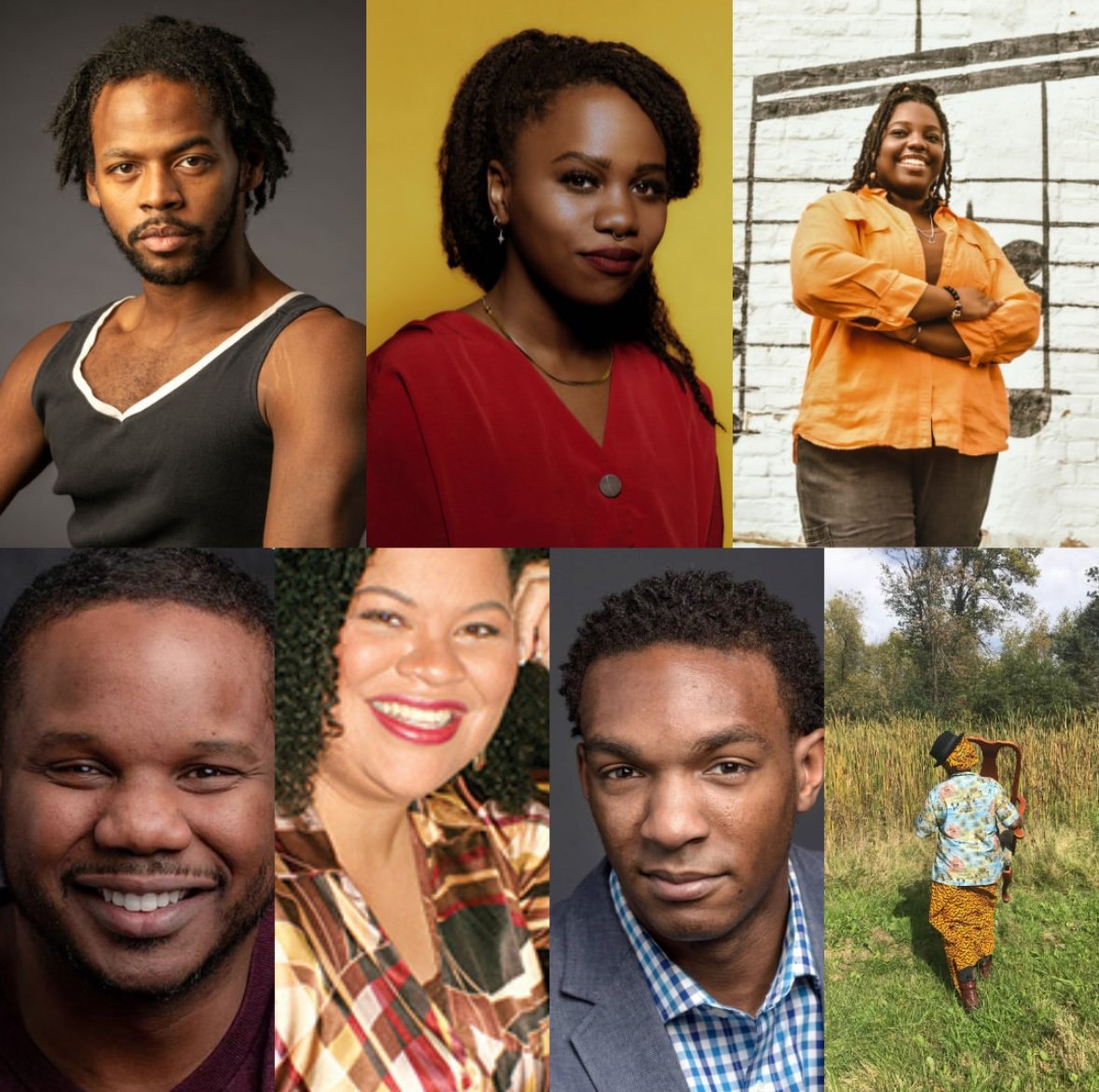
Lights up on two dancers–Larry Darnell White and Matthew Roberts–centerstage. With a resounding declaration of “2009,” playwright Zola Dee and director/choreographer Dominic Moore-Dunson launch us into Aftermath, a movement, musical, and spoken-word piece that serves in Moore-Dunson’s own words as a “moment of reflection five years after the death of George Floyd,” but also “a lifetime of being Black in America and witnessing, or experiencing, the ongoing trauma of police violence.”
The narrative follows two Black individuals from their childhoods into adulthood. Tandem movement between the two dancers (who also perform speaking parts in the piece), constantly pushing, pulling, lifting, and relying upon each other, is accompanied by the live vocals of Thomasina Petrus and Veronique Kolibe-Gnamikou ‘27 (Psychology, double minor in entrepreneurship and ASL) and powerful soundscapes curated and composed by Petrus. The powerful repetition of the lyrics “Black Boy, Black Joy” and “Brother, blood brother” tie the narrative together and remind us of the shared childhood which ties the two characters together, even once their connection is strained when one character becomes a police officer (“Aren’t you a part of a different brotherhood?” the other character asks him). Motifs also appear in the choreography, including handshakes, hugs, hand gestures evoking guns, and symbols of protest. The physical intimacy of the male dancers is extraordinarily powerful, making it all the more gut-wrenching when their friendship is lost. However, their brotherhood never is.
Throughout the narrative, the two characters reckon with the violence they witness from year to year. A particularly powerful scene occurs in 2012 when they are 13 years old and witness the murder of Trayvon Martin. One character laments that his friend always taught him that “bad things happen to bad people,” but he finds this belief impossible to reconcile with the death of another young Black man.
Among the most outstanding aspects of the performance is the spoken-word poetry of St. Kate’s student Kolibe-Gnamikou. When she stands from her seat at the front corner of the stage, she introduces herself as The Poetess. When asked about her poetry process during the question and answer panel at the end of the performance, Kolibe-Gnamikou explained that throughout the process of writing, she turned to the white perspective projected onto Black people. This is reflected in Poetess’ “Ain’t It Funny,” which reflects frankly on how white people possess and exercise their ability to take away Black joy.
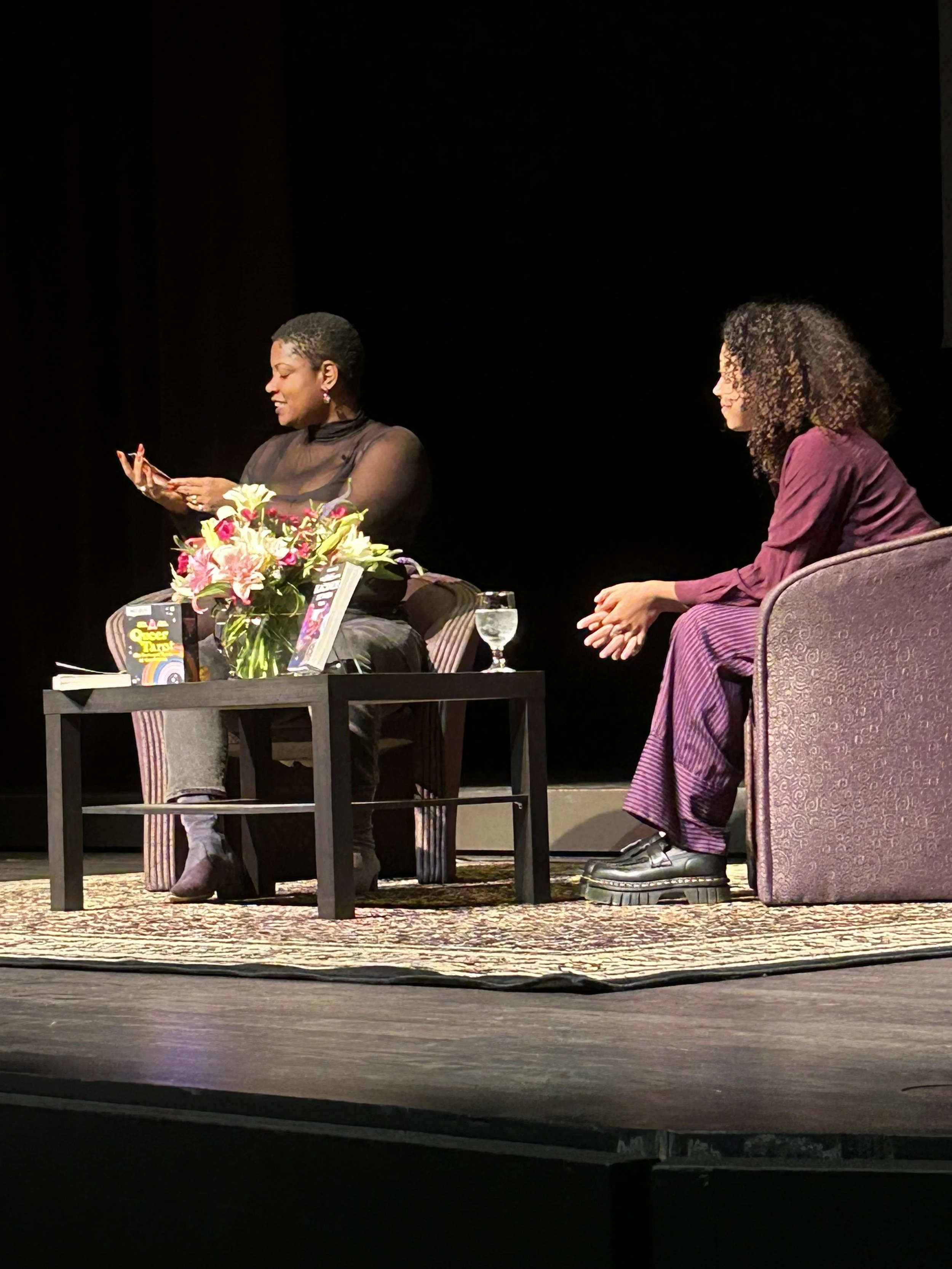
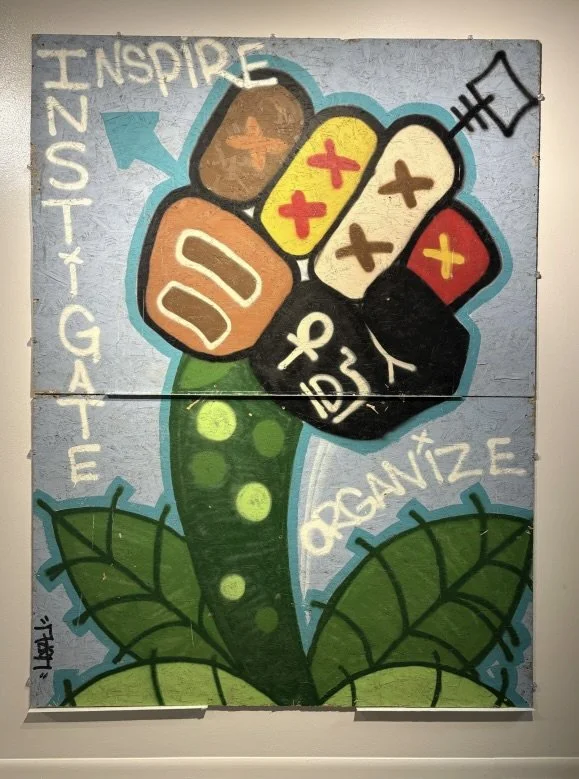
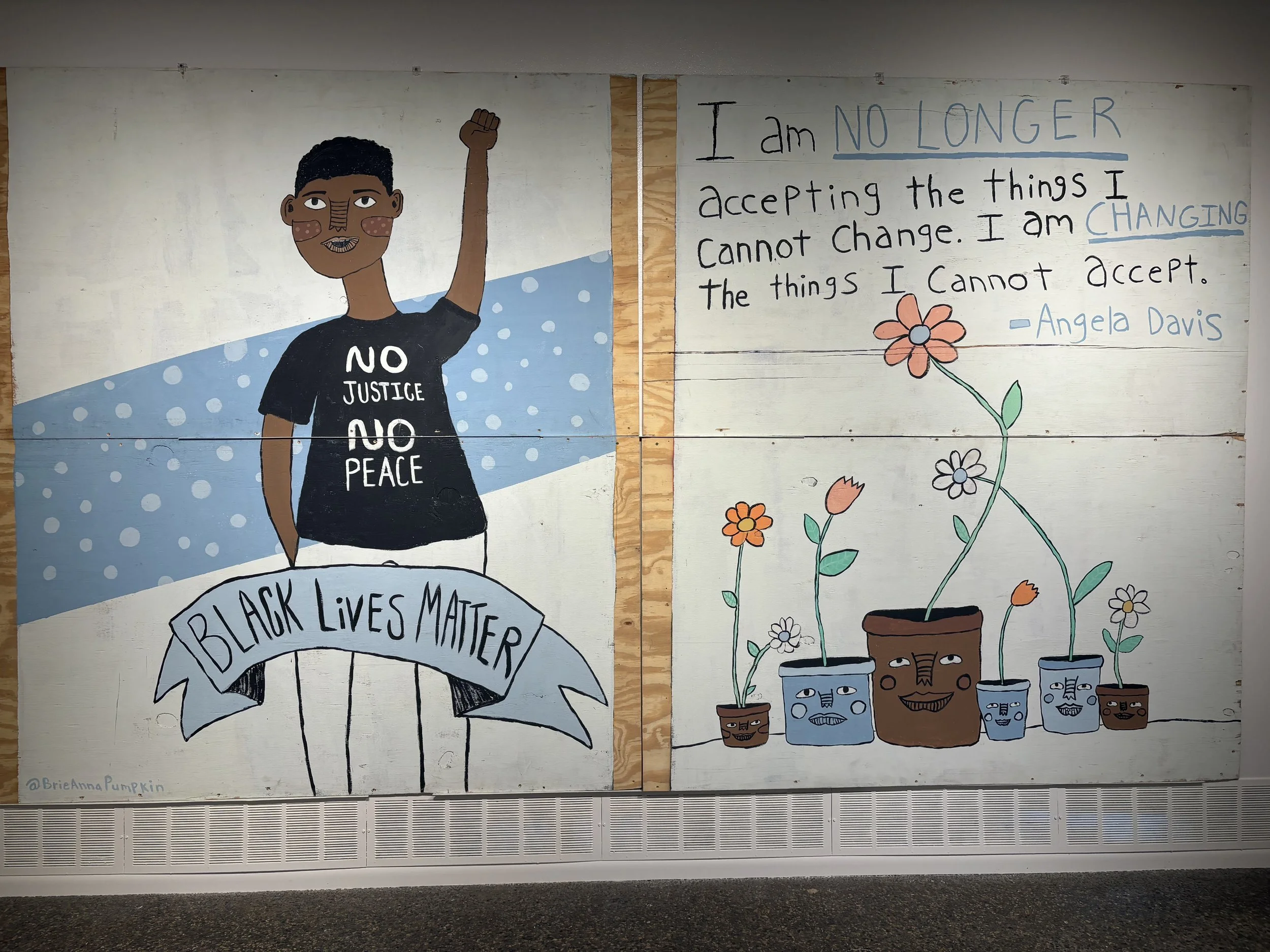
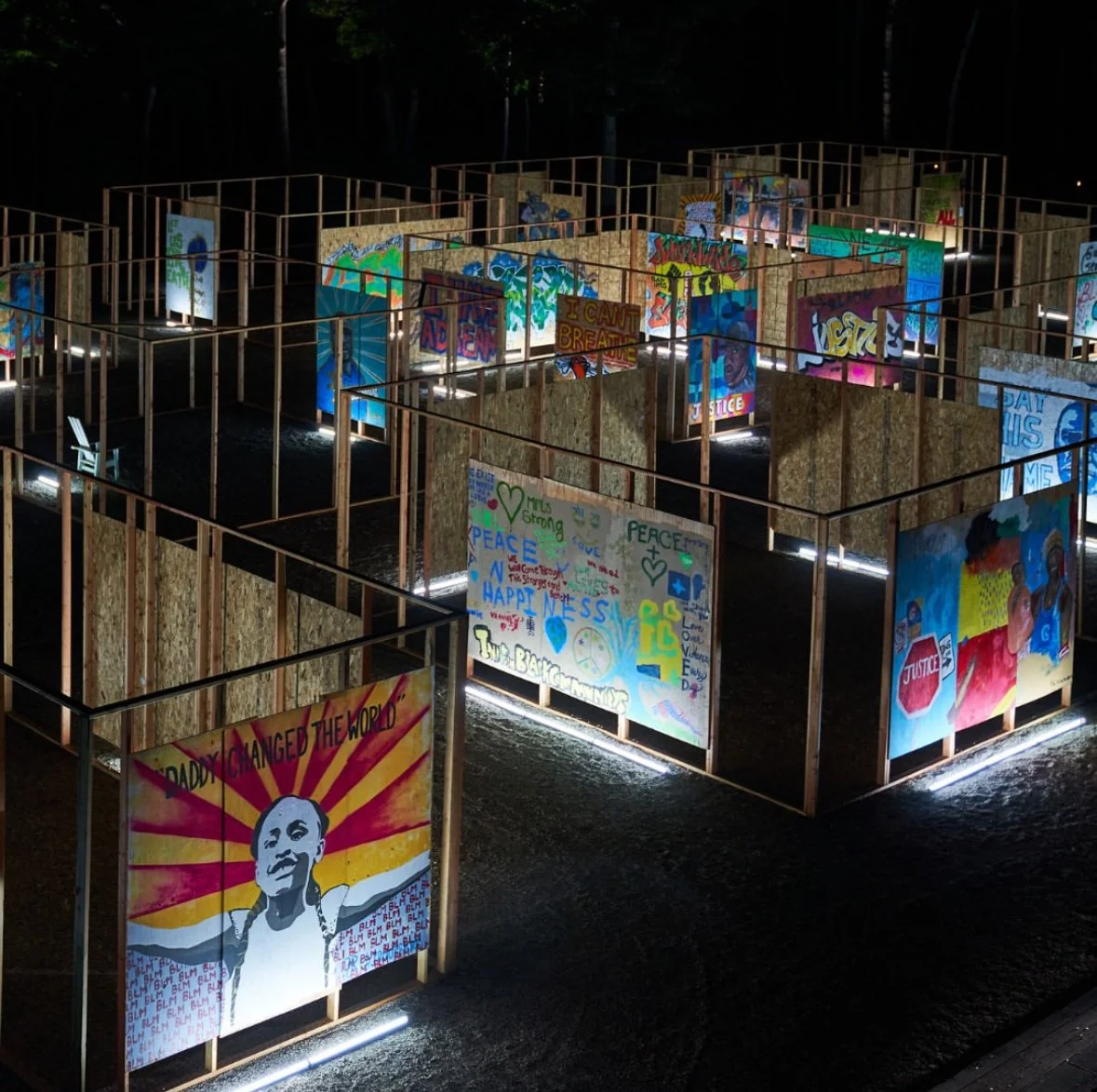
Moore-Dunson explained during the panel that Aftermath reflects on “internal work” - the role of every individual to reckon with racism and its presence in our lives. Leesa Kelly, Founder and Executive Director of Memorialize the Movement - who curated Night and Day: Murals, Memory and Movement, the exhibition to which Aftermath serves as related programming - explained that the intention of both the exhibition and the performance was to bring people back to 2020. She emphasized re-examining ourselves and reflecting upon what has and has not changed. The panelists concurred that there is still “work to do,” in the words of Petrus, especially for the white members of the audience.
During the question and answer session, many audience members asked about the interplay between art and activism. Dee remarked on the power of anger as a motivator for creation and change. She explained that there are people “trying to keep us inactive” and we cannot give in. Petrus added that we are not meant to carry around such anger and pain, and that expression is necessary for survival. When asked what visual and performance art can do that other forms of protest cannot, Kelly replied that because art “elicits such strong emotion” it has the power to “affect us on an individual level.” Aftermath, like Night and Day, takes us on an emotional journey of past, present, and future: what has happened, what we must do now, and where it will take us.
Just one part of a huge variety of programming presented by Memorialize the Movement on campus, Aftermath is a powerful call-to-action and demand for change. The piece was also co-presented with Katie Leadership Impact, a St. Kate’s program honing the abilities of student leaders.